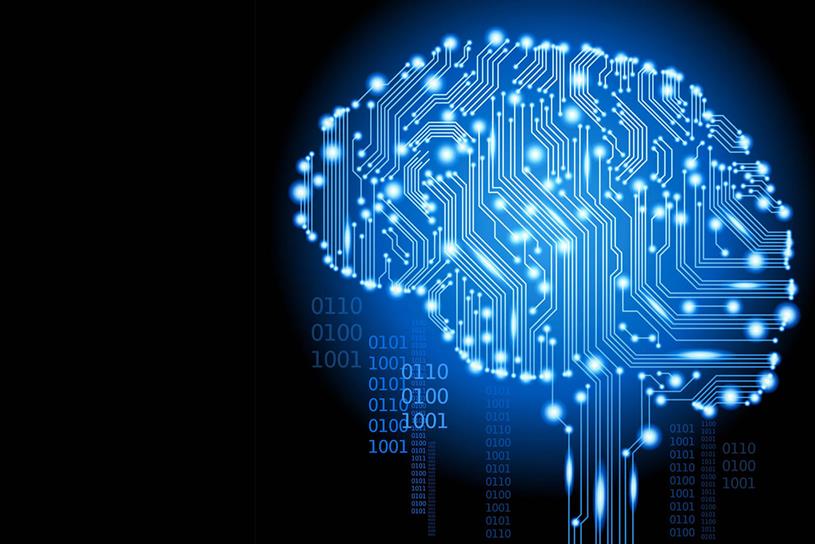
Whole Brain Emulation – The Best Solution There Is…?

Singularity, the single most life-changing event for all human species, seems like a far off dream in an uncharted sidereal valley. Throughout time, humans have tried to adapt their physique to ever-demanding situations, but have applied little effort to engineer the mind, no doubt due to the challenges we face. We go about our daily lives, accepting our fate, being slaves to biological evolution, our senses holding us hostage from experiencing the multitude of conscious states there are. While it is desirable to do so, we are no near to architecting the mind than creating a general AI. The chance of achieving either is inextricably linked to the other. It is impossible to create AI in our image if we do not understand the workings of the little grey cells.

While it is so hard to understand the brain and its workings because of the extremely delicate environment in which it operates and the complexity of its inner workings, humans are slowly (at a snail’s pace) moving closer to realizing the phenomenon. In popular culture, Brain Emulation has been showcased in television series like Black Mirror in multiple episodes like White Christmas and San Junipero. These episodes explore the benefits as well as the dystopian aspects of living in a world where WBE becomes the norm. Other media also like games like Soma have mind uploading or WBE as one of its core story points and build around it.

The ease with which WBE is depicted in popular media where everything is acted out with a pre-determined script contrasts directly with the humongous effort and power that is required to manifest it functionally. Multiple milestones need to be achieved, each harder the one before, though the goal in sight is quite transparent.

  • Data needs to be aggregated about every single part of the brain and its parameters, right down to the smallest cells, a task akin to the human genome project in its size and complexity, perhaps more so.
  • Intricate complex networks need to be created that strictly adhere to the general model of the brain.
  • Perhaps the most challenging part of the entire process, the functional behavior of the cells, need to be programmed.
  • The mechanism needs to run in real-time on a supercomputer the likes of which have not been seen until now.

Trying to change the characteristics and behavior of human beings socially or culturally when the genetic process opposes will not bear fruit in the long run. The genetic code dictates human beings to put themselves first, survival instincts kick in, and there is little regard for other members of their species. Examining the benefits of whole brain emulation, it is almost maddening that humanity is not focusing all of its efforts to make it a reality. Engineering the brain to experience states of mind at a whim at no cost to oneself or others and genetically transforming minds for the greater good of all is probably what utopia would be like.

However, just like all technology, which can do extreme good can also be used for diabolical schemes. Taking minds hostage and artificially forcing atrocious memories or punishments to be experienced directly by the mind is one application of this technology that would be truly devastating, akin to a purgatory that never ends. Great care has to be taken to safeguard humans from a form of punishment that can be virtually endless and also be challenging, if not impossible, to detect. Thankfully, this technology is still quite far away and I will probably not be around by then.

AI and VR: The start of something Explosive!

Virtual Reality is changing the world in ways unprecedented till now in the fields of gaming, video and other interactive experiences. VR has provided the perfect platform for movies and games which rely on the atmosphere of their product and with this technology the genre of ‘horror’ is going to be realized in ways more scarier than the next. Imagine controlling a character in a game who is stuck in a dense forest at night, quietly praying for the sweet release of death at the base of an old oak tree while its roots menacingly inch nearer and nearer towards him or her. However, in the virtual world, it is not going to be your favorite character, rather it’s going to be you in that situation with your senses and your mind constantly at odds with each other with what is being experienced and what you know to be true. Removing you from the confines of the real world and pulling you in the world of make-believe is what VR does best and sometimes that can be very nice, other times not so much.

For movies, it can accomplish the same. For most of us movie buffs, one of the best battle sequences presents itself in Lord of the Rings, in the form of the battle at Helm’s Deep. The clang of the swords of the orcs against the shield of Aragorn, the swish of Gimli’s ax and the ability to travel along the length of the arrow fired by Legolas just before it strikes an orc in the eye would be a truly surreal experience indeed. Being at the center of the action while being invulnerable would be a phenomenon that would be hard to put into words.

Movies and games aside, it has immense applications in the fields of academics. Aspiring doctors can benefit from first-hand experiences with this technology. Being able to go through the internal structures of the human body in life-size detail or experiencing the effects of various symptoms first-hand to understand exactly how a patient would feel would do wonders.

While it is quite obvious that Virtual Reality and Artificial Intelligence are the next big thing and will be changing the lives of millions of people around the globe, the benefits (and repercussions) of clubbing the two titans together is something that is still in the inchoate phase. Fast-forward to a time when they are no longer fledglings and things start to get much more interesting.

Training and practice methods for sports and fitness activities would change drastically. No longer will be partnering against opponents who are roughly equivalent skill levels. Precise scans and simulations would make it possible to play against the best opponent you have never been able to play against yourself. With every match being an incremental improvement and the fact that there will never be a dull match breaks the monotone that many candidates feel during training sessions. Single-player video games would stop being an easy chore to experienced gamers and beginners would have the perfect mentor. In time, Earth might become just a memory and our brain scans would live on in utopian worlds designed and run on software.

Need for Dynamic AI in Interactive Experiences

Most interactive experiences are lacking difficulty options with the current trend that is pervading across the gaming industry of expecting the player to play the game according to the vision of the developer. These types of rigid constraints and ideas can alienate new players because of the increased difficulty. Take for example, a game like Dark Souls where insanity reigns and the player is required to perfect his every move and carefully read the subtle tells that enemies make to save himself from danger or risk staring from the previous checkpoint or a polar opposite like Uncharted 4 which make playing a game a dull and monotonous for experienced players who have played one too many games of the same genre and are well versed with the mechanics by now and feel like they are subjected to an on-rails experience where no agency for critical thinking is being presented to them. While there are a few which masquerade around advertising about dynamic difficulty based around the player, these usually don’t have any meaningful level of integration within the game-world. They are usually superficial, like in Resident Evil 7, where the amount of resources the player finds in the world is dependent on the quality or amount of resources the player already has in his arsenal.

While the age-old practice of having static difficulty options still exists, on higher difficulties, they just make the enemies into bullet sponges (I’m looking at you – Borderlands!) and transform you into a glass figure which turns the mission into an arduous task for little or no rewards and most of the time a lot of cowering around for your health to regenerate. In lower difficulties, these are quite prone to holding your hand and bestowing upon you the status of a God who is virtually invincible while your adversaries fall like a stack of dominoes at the slightest touch of your bullet. They do not meaningfully change the behavior of the enemy. It is essential that we as gamers not be satisfied with the current level of customizable difficulty present and push for better experiences. After all, necessity is the mother of invention and for such “inventions” to happen where games truly feel ‘next-gen’ it would be wise to provide a conducive environment for ideas to flourish and reward such implementations.

The AAA industry has stagnated to a large extent and has now become synonymous with producing rehashes. This might not just be the fault of the developer. Incentivising rethreads of the same game by buying or pre-ordering it sends a message to the developer that they are on the right track which leads to a detrimental effect on the industry. You could be playing Assassins Creed and not even be able to recognize whether it is the second or the eighth in the series. Bringing out dynamic enemy behavior depending on the minute to minute actions of the player can create more exciting experiences. It can drive the level of engagement so that the player is constantly evolving and does not need to have any kind of filler gameplay where the entire objective is to move to the next thrilling part if it exists!

Technology and costs might be a limiting factor that is still holding back developers from creating such experiences. Players might not have the kind of processing power that is required for changing the core of the experience or to create separate models and enemy AI ranging from the easiest to the hardest. It might be difficult to play-test too as no two humans would have the same level of skill. However, it is high time that we commit to improving the mechanics of interactive experiences by trying in small steps rather than increasing the fidelity of the pixels on the screen when all that we get out of it are diminishing returns which are more a measure of the ability of technology to improve rather than an assessment of the interactive medium’s evolution.